
What Are Special Dividends and How to Trade Them?
If you’re just getting started with LevelFields or dividend investing, the amount of data on the platform can feel overwhelming. One of the easiest ways to simplify things is to focus on one clear, high-impact scenario.
Special Dividends are one of the most beginner-friendly strategies available. They are easy to understand, require minimal holding time, and can generate meaningful returns in just a few days.
What Is a Special Dividend?
A special dividend is a one-time cash payment that a company makes to shareholders, separate from its regular dividend schedule. These payouts usually happen after a major financial event, such as:
Selling a business unit or asset
Receiving a large legal settlement
Completing a merger or spin-off
Accumulating excess cash beyond operating needs
Unlike regular dividends, special dividends are event-driven, which makes them ideal for short-term strategies.
Why Special Dividends Can Be So Powerful
Special dividends often represent a large percentage of the stock price, which creates a unique opportunity.
For example:
A $0.60 special dividend on an $8 stock equals a 7% cash return
That return can be earned by holding the stock for just a few weeks
No long-term commitment is required
Because these dividends are announced suddenly and tied to specific events, many investors don’t react immediately—creating a window of opportunity.
How the Special Dividend Strategy Works
The strategy is simple:
Buy the stock before the ex-dividend date
Hold through the record date
Receive the special dividend on the payment date
Decide whether to sell or continue holding
You are not required to hold the stock long term. In most cases, investors are simply capturing the dividend payout.
What Makes a Special Dividend Worth Trading?
Not all special dividends are created equal. Focus on these key factors:
1. Dividend Size Relative to Stock Price
The most important metric is percentage return, not the dollar amount.
A $0.05 dividend on a $50 stock is insignificant
A $0.50 dividend on a $7 stock is meaningful
As a rule of thumb, special dividends above 3–5% of the share price are worth closer attention.
2. Company Financial Health
The best special dividend trades come from companies that:
Are profitable
Have positive or stable earnings
Are distributing excess cash—not borrowing to pay dividends
This reduces downside risk around the event.
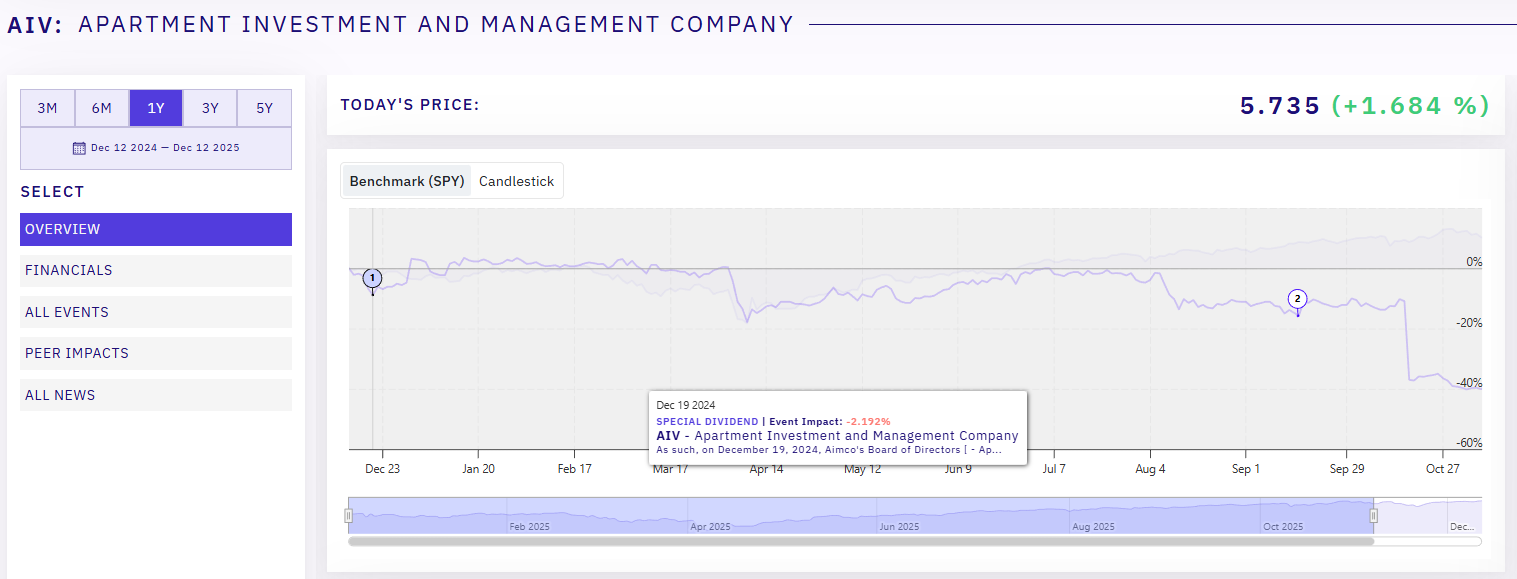
3. Timing Around Earnings
If a company announces a special dividend on the same day as poor earnings, the market may focus on the bad news instead.
Always check:
Whether earnings were reported recently
How the stock reacted to those earnings
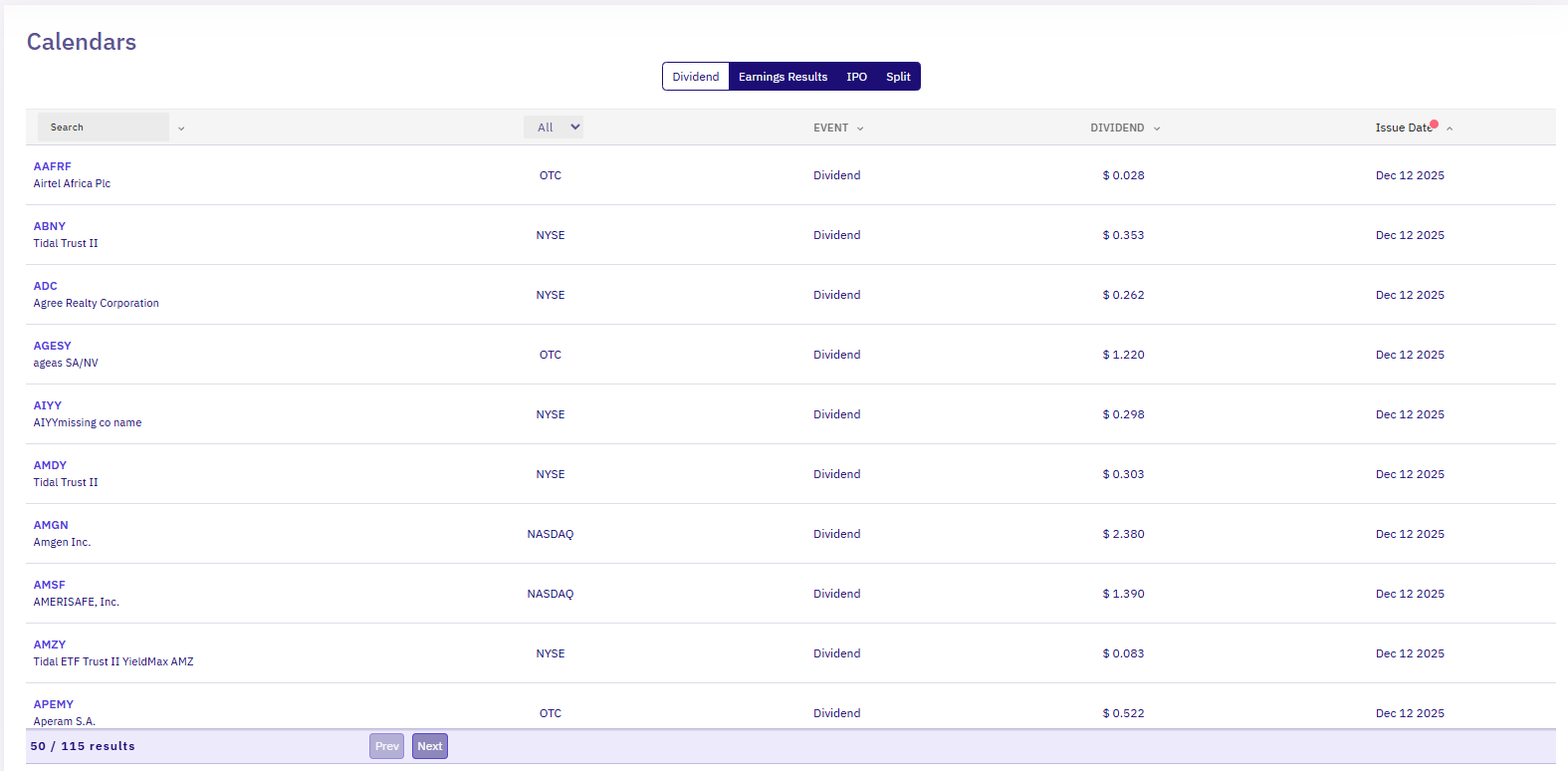
Earnings dates are visible in:
LevelFields alerts
Company profile pages
The earnings calendar:
https://app.levelfields.ai/calendars
How LevelFields Helps You Trade Special Dividends
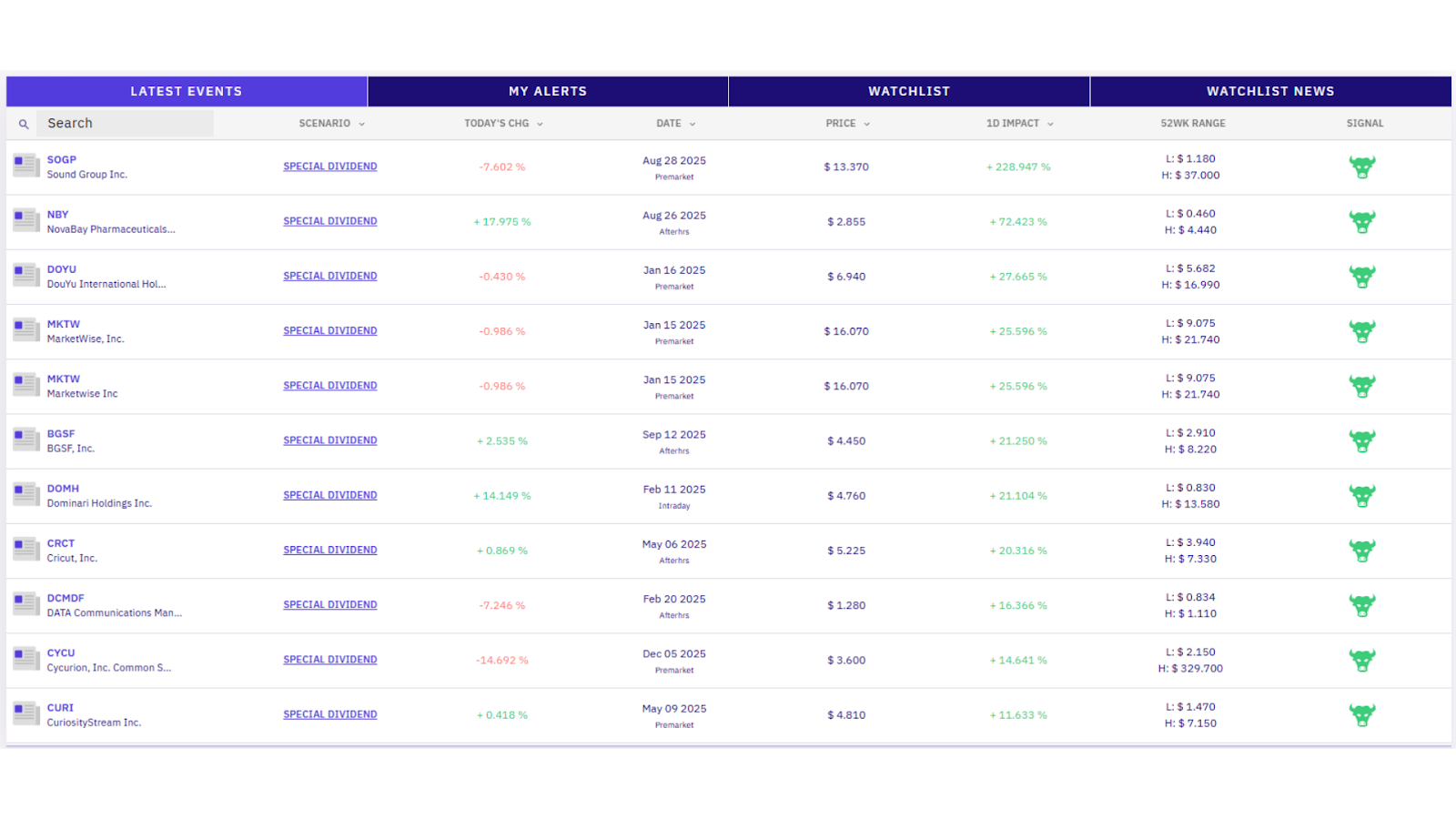
LevelFields AI scans filings and press releases in real time to detect special dividend announcements the moment they are released.
For each alert, you can see:
The dividend amount
The return as a percentage of share price
Key dates (ex-dividend, record, payment)
Company fundamentals and earnings context
This allows you to identify high-impact opportunities before they become widely discussed.
Pro tip:
Special dividend strategies work best as short-term income trades, not buy-and-forget investments.
Pro tip:
Special dividend opportunities work best when paired with strong fundamentals. Avoid companies using one-time payouts to mask weak earnings or deteriorating financials, and prioritize businesses that also demonstrate healthy dividend practices—such as consistent dividend increases—for a more reliable income-focused strategy.
Special dividends are one of the simplest event-driven strategies available. By holding a stock briefly around a one-time payout, investors can generate meaningful cash returns in days instead of years.
With LevelFields AI, these opportunities are surfaced automatically—allowing you to focus on execution instead of searching through filings.
Special dividends can also be a significant macroeconomic indicator that something unusual is happening.