
How to Trade Stocks on New CEO Announcements
A CEO change is a signal, not a thesis. The market reacts differently depending on whether the company is already winning or in trouble — and who the new leader is.
Strong Companies: Usually a Sell-the-News Event
When a well-performing company announces a new CEO, the stock often reacts modestly or even sells off.
Why:
• The business is already executing
• Expectations are high and hard to exceed
• Investors fear disruption to a working model
In these cases, upside is limited unless the CEO brings a clear strategic edge (e.g., expansion, turnaround experience, or capital discipline).
Weak or Troubled Companies: Relief Rallies Are Common
For underperforming firms, a new CEO can trigger sharp upside:
• The bar is low
• Change itself is viewed as progress
• Turnaround language fuels multiple expansion
These moves are often strongest in the first 1–5 trading days and fade unless execution follows. If it does and the CEO executes a turnaround, profits could be huge for long-term investors.
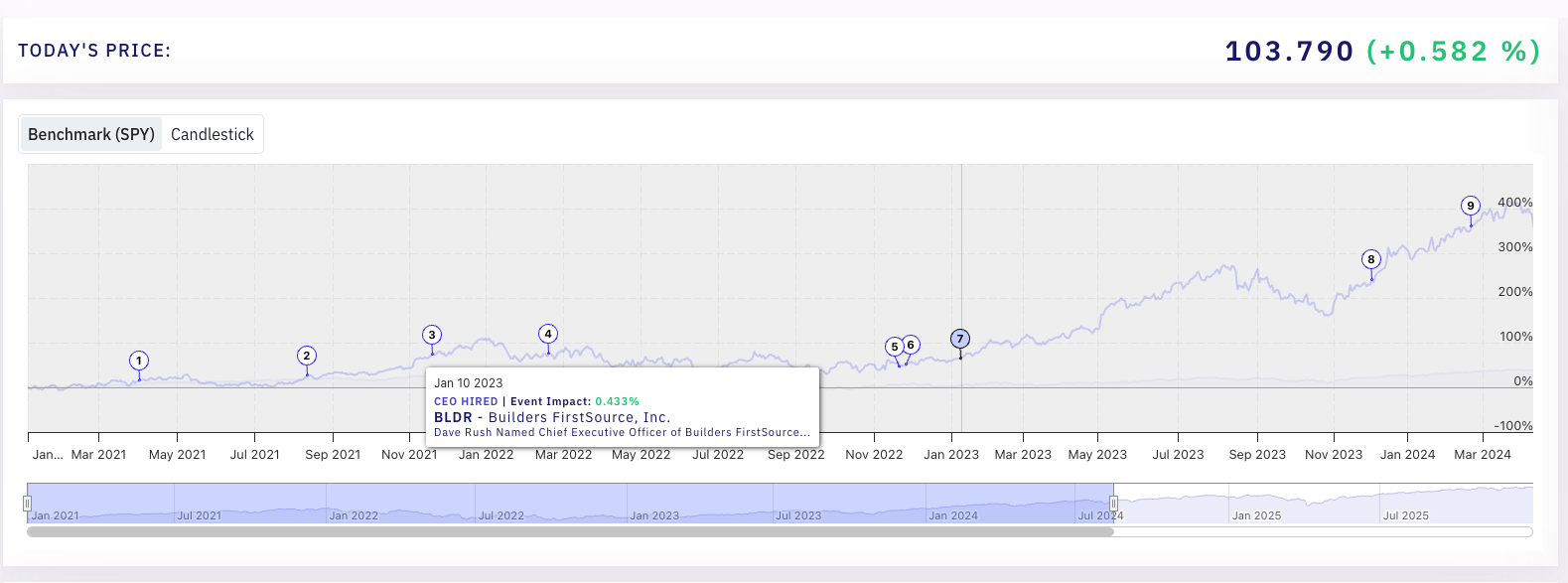
Example: BLDR stock up 200% following new CEO
Celebrity CEOs Change the Math
High-profile operators with proven track records can create immediate re-rating. A clear example: the CEO of Chipotle moving to lead Starbucks. Markets treat this as imported credibility — pricing in operational fixes, cultural change, and renewed growth before results show up.
How to Trade It
• Trade momentum early, not long-term hope
• Size smaller — reversals are common
• Filter stocks by financials. Weak financials = higher stock price increases [low revenue growth, negative earnings, negative earnings growth]
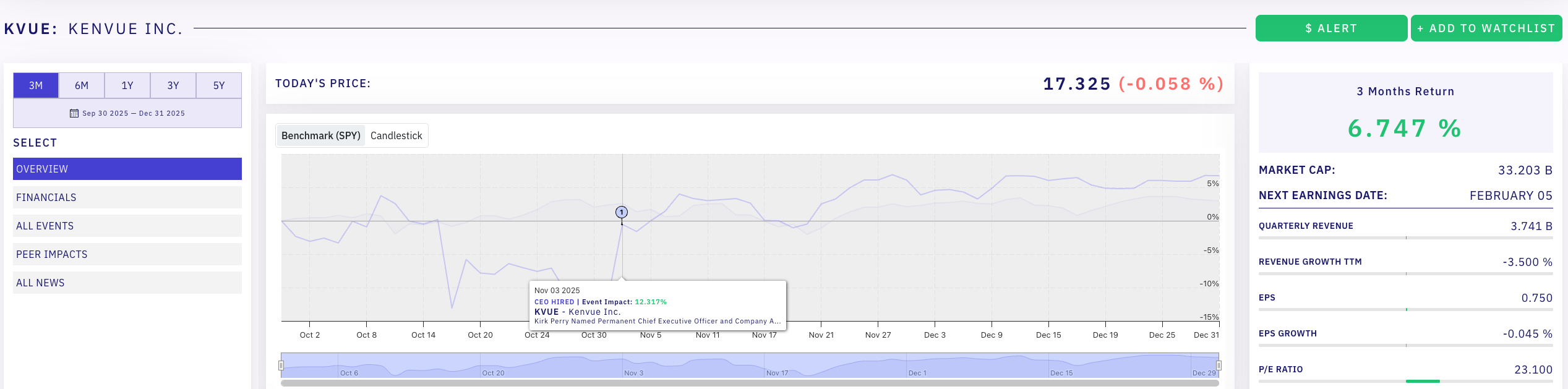
Example: Kenvue rises 12% on news of new CEO. KVUE had negative revenue and earnings growth.
Bottom line: trade expectations, not press releases.